

Competitive Socializing: How Digital Sports Help Entertainment Venues Attract Group Bookings
For an entertainment venue, a group booking creates a practical challenge: how do you keep guests with different interests and skill levels involved in the same experience?
One guest enjoys sports. Another prefers casual games. Some want to compete, while others are happy watching their friends before taking a turn. Equipment selection, layout, and session planning all influence whether the group enjoys the visit together.
Competitive socializing, also spelled competitive socialising, combines accessible games with friendly competition and time spent together. Digital sports fit this model by turning familiar physical actions—throwing, stepping, shooting, or reacting—into challenges with visible objectives and scores.
For commercial entertainment center owners, the opportunity goes beyond adding another machine. It is about creating an activity that groups can understand, book, and enjoy as a shared experience.

What Makes Digital Sports Suitable for Group Entertainment?
Digital sports equipment combines physical activity with interactive technology. Depending on the model, this may include sensors, projection, illuminated targets, movement tracking, and automatic scoring.
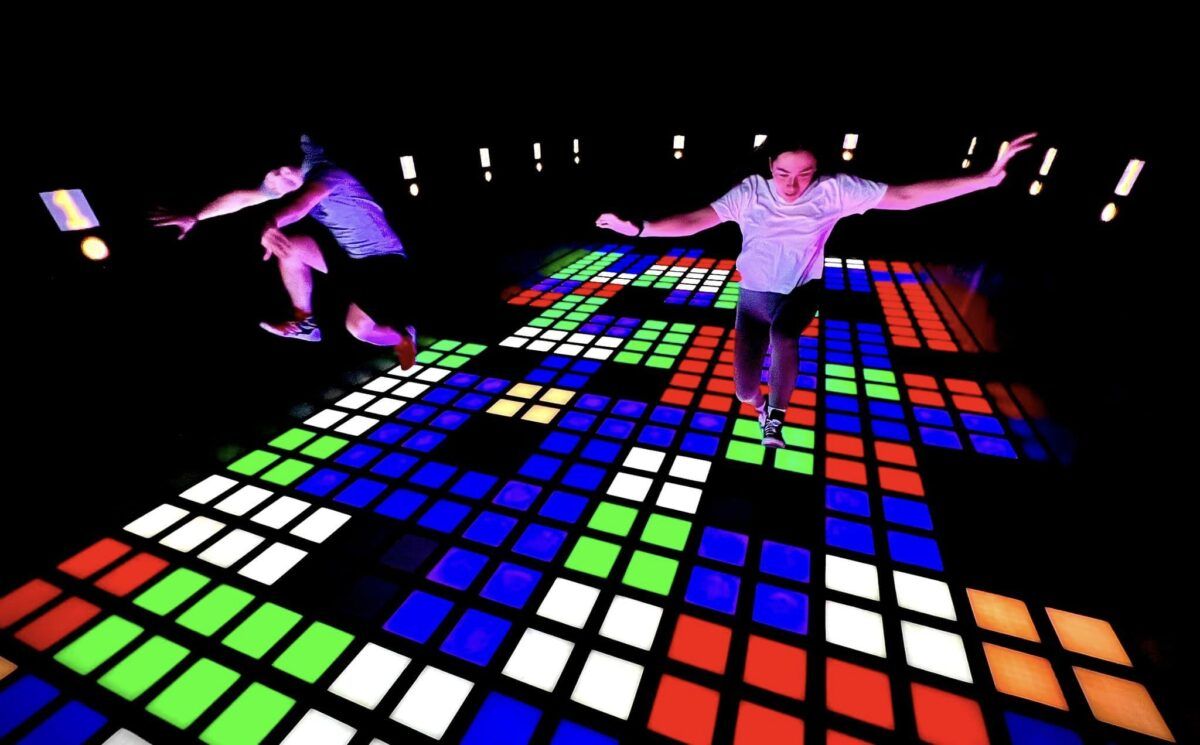
Players might throw a ball at changing targets, compete in a reaction challenge, or work together to complete an interactive floor game.
Three features are particularly useful for social venues.
Clear Rules Help More Guests Participate
A game with a visible objective is easier for a mixed group to approach. Guests can watch a round, understand what earns points, and decide to join.
When evaluating equipment, check how the game introduces itself. Are instructions available in the language your customers use? Can players see where to stand? Does the screen explain when the round starts and finishes?
Short instructions still matter. A visually impressive attraction can become difficult to operate if staff must explain every step to each new player.
Visible Scores Give Spectators Something to Follow
A score display or countdown can make a game interesting for the whole group. Friends can follow the result, encourage the player, and prepare for their own turn.
This benefit depends on the layout. Screens should be visible from the waiting area, and spectators need somewhere to stand without entering the active play zone.
At ELONG, our planning advice is to consider the people watching as carefully as the person playing. For a six-person group using a single-player attraction, the experience of the other five guests is part of the equipment decision.
Different Challenges Create Reasons to Play Again
Close scores can encourage rematches. Alternative game modes and difficulty levels, where available, give players different objectives to attempt.
However, repeat visits also depend on how the venue operates. Weekly challenges, team events, and changing activity packages can give customers a reason to return beyond improving one score.
Turn Digital Sports Into a Bookable Group Experience
Equipment provides the activity. A clear package makes that activity easier to sell.
Someone organizing a birthday or company event needs answers before booking:
- How many people can participate?
- How long does the session last?
- Which activities are included?
- Will a staff member guide the group?
- Is seating available?
- What happens if some guests prefer not to play?
Create a dedicated group booking page that answers these questions and provides a straightforward inquiry or reservation process.
For example, a venue could test a 60-minute package combining a reaction game, a ball-target challenge, and a team floor activity. This is an illustrative format; the group size and rotation schedule should follow the actual capacity of the selected equipment.
Avoid offering a package based only on how many attractions fit into the room. Check whether the entire group can move through the session comfortably.
Choose a Revenue Model That Fits Your Venue
Digital sports can support different offers, from individual games to hosted events.
| Revenue Channel | Possible Offer | Main Planning Requirement |
|---|---|---|
| Walk-in gameplay | Individual paid games or timed sessions | Visible pricing and a simple payment process |
| Friends and family groups | A timed rotation across selected attractions | Suitable group size and clear changeovers |
| Birthday parties | Hosted team challenges with celebration time | Age suitability, supervision, and seating |
| Corporate events | Team competitions with optional refreshments | Booking coordination and consistent scoring rules |
TOCA Social offers an example of interactive football combined with dining and group events. Activate demonstrates another approach, using physical game rooms, difficulty levels, and team scoring. These concepts illustrate different ways to organize social play; they do not establish the financial results another venue should expect.
A smaller commercial entertainment venue can begin with a focused activity package and a few complementary attractions. The offer should fit local demand, staffing, and available space.
Track confirmed bookings, revenue per session, operating costs, and customer feedback before expanding it.
Select Equipment Around Your Target Audience
A balanced digital sports area gives guests different ways to participate.
Reaction games emphasize speed and attention. Ball-target games use familiar throwing or shooting actions. Interactive floor games can introduce movement and teamwork. Basketball and other recognizable arcade sports can help connect a new digital sports zone with an existing game floor.
Choose the mix according to your customers rather than appearance alone.
For a birthday-focused venue, consider age requirements, reach heights, instructions, and supervision. For corporate groups, consider team formats, spectator visibility, and how easily a host can organize the session.

ELONG’s Advice: Test the Full Experience
When reviewing commercial digital sports equipment, ask to see a complete session rather than only gameplay highlights.
Watch how a first-time player starts, how results appear, and how the next player takes over. Check what happens when someone misses a target or does not understand an instruction.
At ELONG, we recommend using these observations alongside specifications when comparing equipment. A clear changeover process matters when several groups are waiting.
For products with multiple modes, request a demonstration of the exact software and configuration included in the quotation.
Plan the Full Operating Footprint
Cabinet dimensions are only one part of digital sports venue layout planning.
The operating area may also need space for physical movement, ball containment, spectators, queues, staff access, and maintenance.
Football and throwing attractions require particular attention to the direction of play and containment of stray balls. Interactive floor systems require an unobstructed activity area appropriate to the selected game.
Request the installation drawing and operating clearance requirements for each model. Check ceiling height, columns, doors, emergency routes, electrical supply, and adjacent activities before confirming the layout.
A machine that fits on a drawing may still be unsuitable if its players or queues block circulation.
Calculate Capacity Using the Complete Game Cycle
Gameplay duration alone does not determine hourly capacity.
Use the complete operating cycle:
Total cycle time = briefing + gameplay + result display + changeover and reset
For illustration, a 60-second game with a 30-second changeover has a theoretical capacity of 40 cycles per hour, before additional delays. If one person plays in each cycle, that represents 40 player sessions—not necessarily 40 different customers.
Group packages require another check: can each attraction accommodate its assigned guests within the rotation time?
If one activity takes much longer than the others, queues may build around it. Adjust the group size, session schedule, or equipment mix before selling the package.
Confirm Digital Features Before Ordering
Equipment features vary by model. Automatic scoring does not necessarily include a shared leaderboard, and cashless payment support does not automatically include player identification.
Ask the supplier to confirm the following in writing:
| Item | What to Confirm |
|---|---|
| Game modes | Included activities, languages, difficulty levels, and player numbers |
| Scoring | Local scores, team scoring, and any supported shared leaderboard |
| Payment | Compatibility with the specific reader, interface, wiring, and configuration |
| Connectivity | Which functions require internet access and what works offline |
| Software costs | Any subscription, licensing, update, or additional content fees |
| Maintenance | Cleaning, calibration, wear parts, troubleshooting, and technical support |
If wristbands, shared profiles, or venue-wide rankings are essential to your concept, verify the complete integration before purchasing.
Give Customers a Reason to Return
Repeat visits need a visible offer.
A venue might introduce a weekly reaction challenge, a monthly team competition, or a new combination of activities for returning groups. Keep rules easy to understand and provide a way for customers to discover the next event.
Measure whether these activities produce repeat bookings. Useful indicators include returning groups, package sales, customer feedback, and revenue after staffing and promotional costs.
The aim is to identify which experiences customers value enough to book again.
Plan Your Digital Sports Area with ELONG
A practical competitive socializing area connects equipment selection with group activities, layout, and everyday operation.
ELONG—Guangzhou Elong Animation Technology Co., Ltd.—manufactures commercial arcade equipment and supplies digital sports and interactive entertainment solutions.
Our recommendation is to begin with your audience and operating plan, then select equipment that supports them. A compact area with complementary games and a clear group package can be a useful starting point for testing demand.
Planning a new commercial entertainment center or upgrading an existing venue? Share your floor plan, ceiling height, target audience, and budget with ELONG to discuss suitable equipment options and layout requirements.
